Sentiment Analysis Survey India: Read What India Really Feels
Sentiment analysis survey India on Hercules with Poseidon — code Hindi, Hinglish and 8+ languages, extract themes and track brand feeling fast. Start free →
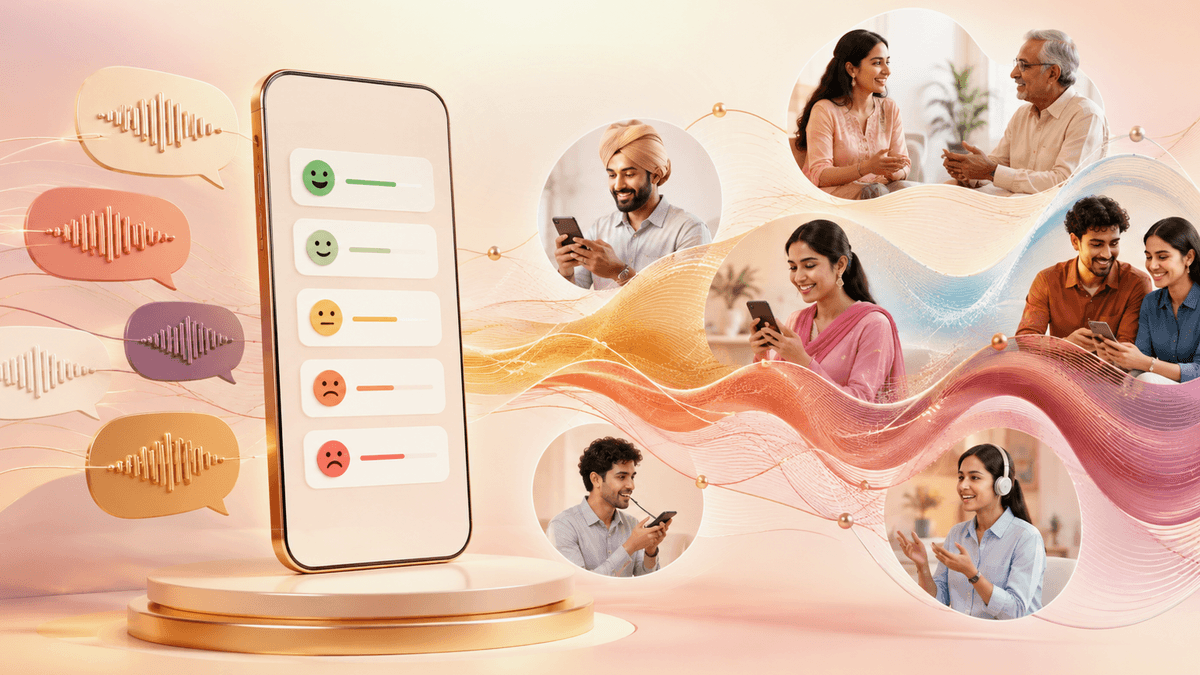
In shortSentiment analysis survey India on Hercules Works means Poseidon's AI reads every open-ended comment in Hindi, Hinglish, Tamil, Telugu and 6+ more languages, tags emotion and theme, and turns 5,000 scattered verbatims into a ranked feeling map in hours — verified, not vibes. Built by Jupiter Meta Labs in Hyderabad, delivered on the SuperJ app's 20M+ verified Indian consumers, priced from Free ₹0/month.
Contents
- Why Indian Sentiment Needs an Engine, Not a Dictionary
- How Poseidon Codes Verbatims: Typed, Then Tagged, Then Trusted
- Hinglish, Hindi, Tamil, Telugu: Coding the Way India Actually Types
- Aspect-Based Sentiment: One Comment, Five Opinions
- Sentiment Across Every Study Type: NPS, CSAT, Concept, Ads, Brand
- Hours Not Weeks: Speed, Verification and the Price Question
- What researchers say
- Frequently asked questions
- Related guides
Why Indian Sentiment Needs an Engine, Not a Dictionary
Ask any research manager in Mumbai what kills a survey report and you will hear the same word: verbatims. Two thousand open-ended answers sit in a CSV, and someone has to 'read' them — which usually means a junior analyst skims 10%, an agency charges ₹4 lakh for coding, and the final deck says 'respondents are generally positive' while missing the exact moment a Kannada comment said 'battery kharab hai, but camera is too good.' Sentiment analysis survey India fails when it treats Indian feedback like English survey feedback. It is not. Indians type in Hinglish ('kaam nahi karta', 'paisa vasool'), switch scripts mid-sentence ('delivery was late but 5-star for quality'), use sarcasm ('wow, another OTP, what fun'), and express sentiment through emoji, intensifiers and regional phrases that a basic English lexicon reads as neutral or, worse, positive.
Hercules Works built Poseidon for exactly this mess. Poseidon is the AI analytics engine from Jupiter Meta Labs, Hyderabad — FastAPI, LangGraph, Google Gemini, DuckDB and Parquet under the hood — and its text pipeline understands survey structure before it understands language. It maps every open-ended column through the Survey Knowledge Graph, applies sentiment analysis in 8+ languages including Hindi, Hinglish, Tamil, Telugu, Bengali and Marathi, extracts themes with frequency and co-occurrence, and labels each verbatim with confidence. The results sit on top of the SuperJ app — where people answer surveys in exchange for rewards — 20M+ verified Indians, ZK-verified with zero bots, across Tier 1, Tier 2 and Tier 3 cities, at 60-90%+ response rates. So sentiment analysis survey India on Hercules is not a generic 'positive/negative' tag; it is a theme map of what Mumbai, Patna, Coimbatore and Surat actually feel, delivered in hours, not weeks.
Pricing keeps it honest: Free ₹0/month permanent (10 AI chats, 100 SuperJ users, 100 free responses month one), Starter ₹1,119/month (₹895 billed annually with 20% off), Pro ₹30,000/quarter (₹24,000 billed annually). Trusted by Unilever, Kantar, Government of Karnataka, ICICI Prudential and SBI Mutual Fund. If your last NPS survey ended with 800 unanswered 'why did you give this score?' comments, this page is your fix.
How Poseidon Codes Verbatims: Typed, Then Tagged, Then Trusted
The pipeline starts with structure, not vibes. When SuperJ responses land as JSON, Poseidon builds the Survey Knowledge Graph — Question, Column, Formula and Demographic Axis nodes — and every text column gets typed as text before any sentiment runs. That typing is the difference between an insight and an hallucination: a column that is actually a ranking cannot be averaged, a column that is actually multi_select cannot be sentiment-scored as one blob. Once typed, the 5-phase pipeline (ingest → understand → analyze → verify → report) kicks in. The text phase applies aspect-based sentiment: not just 'this comment is positive', but 'battery = negative, camera = positive, delivery = negative', so a single Hinglish sentence contributes three tagged aspects instead of one vague score.
Eight-plus languages with one honest rule: no translation unless it helps. Generic tools translate Hindi to English first and lose 'jugaad' (it is not 'cheap fix', it is pride). Poseidon codes natively in Hindi, Hinglish, Tamil, Telugu, Bengali, Marathi, Kannada and English, with transliteration-aware matching so 'acha hai', 'achha hai' and 'accha hai' resolve to the same sentiment class. Sarcasm and intensifiers are handled by the LLM layer with a 0-10 Self-Critique pass that flags contradictory signals ('superb... when it works') as mixed rather than forcing them positive. Every verbatim gets a confidence tag — extracted, inferred or ambiguous — so you know which themes are solid enough to quote in a board deck and which need a second pass.
The output is a report-ready theme map. Themes come back with frequency counts, sentiment polarity per theme, co-occurrence pairs (price + delivery complaints cluster together), and demographic slices — what Tier 2 women in Hindi feel versus Tier 1 men in English. Poseidon's 18-node report generator then writes the narrative: 'Battery life is the top negative theme (312 mentions, 71% negative), concentrated in Tier 2 Android users, while camera praise (289 mentions, 89% positive) is the strongest retention lever.' That is sentiment analysis survey India you can paste into a stakeholder email — with the verification badge that says every number was re-derived, not invented.
Verification travels with every tagged verbatim. When Poseidon codes a comment from a shopper in Andheri, Mumbai or a student in Patna, it does not just drop a 'positive/negative' sticker and move on. Each sentiment call carries its base N, language tag, aspect split and a confidence label — extracted, inferred or ambiguous — so a brand manager in Delhi can see exactly how strong a theme is before quoting it in a board deck. The three-layer verification loop re-derives every theme count in DuckDB against the Parquet store, which is why '312 Tier 2 Android users complained about battery' is arithmetic, not an LLM's mood. Built by Jupiter Meta Labs in Hyderabad and delivered through the SuperJ app's 20M+ ZK-verified Indians, this is the same discipline that makes sentiment analysis survey India quotable for Government of Karnataka reports — see the mechanics at survey data verification India. If a number cannot survive a finance review, Poseidon does not print it; that is the honest difference between an insight and a hallucination.
Hinglish, Hindi, Tamil, Telugu: Coding the Way India Actually Types
Indian open-ends are multilingual by default, and tools that pretend otherwise lose half the story. Run a consumer survey in Lucknow and you get 'sasta hai aur chal bhi jaldi hai' (cheap and fast) sitting next to 'delivery delayed due to rain, but packing acchi thi'. An English-only sentiment model reads 'acchi' as neutral garbage; a naive translation layer turns 'sasta' into 'cheap' and mislabels pride as complaint. Poseidon codes natively: the text pipeline recognises the script, keeps the original on record for auditing, and assigns sentiment + aspect in the source language. Hindi sarcasm ('aur kya chahiye, maza aa gaya' after a refund) is flagged by the critique pass instead of scored as delight. That is the difference between a sentiment dashboard that looks busy and one a Hyderabad insights lead can defend in a review.
Regional coverage is a business lever, not a checkbox. Tamil verbatims from Chennai differ from Hindi ones from Indore in both vocabulary and what they complain about; poseidon keeps them separate and lets the Demographic Axis slice by language, city tier and NCCS. A Karnataka Government citizen survey analysed through Poseidon found ward-level satisfaction differences that a statewide average hid — because Kannada verbatims about water supply were coded as a distinct theme, not merged into a generic 'infrastructure' bucket. That granularity is why 8+ languages is a core selling point: India is not one market, and sentiment analysis survey India that collapses it into one English blob is just noise with a chart.
Hinglish gets first-class treatment because that is where volume lives. The SuperJ app's 20M+ verified Indians type the way they text — 'phone heat ho raha hai', 'battery ekdum solid', 'camera theek hai par price zyada hai'. Poseidon's Hinglish layer handles code-mixing, Roman-script Hindi, shortened forms and emoji as sentiment carriers ('🔥' on camera = positive, '😤' on delivery = negative). Co-occurrence analysis then shows that price complaints and camera praise often travel together — the exact 'mixed but improvable' insight a brand team needs before a launch. Built by Jupiter Meta Labs in Hyderabad, this layer runs inside the same pipeline that powers natural language survey analytics India, so you get one engine, not three vendors.
Slang, sarcasm and sentiment mix the way India actually speaks. A response from a kirana shopper in Indore might read 'jugaad se kaam chala liya, paisa vasool' while a college student in Chennai writes 'hostel food is bad but the canteen app is 🔥'. Poseidon does not flatten these into one English blob. It keeps the original script for audit, recognises code-mixing and Roman-script Hindi, and maps regional intensifiers to the right polarity — 'ekdum ghatiya' is not mild dislike just because a lexicon misses 'ghatiya'. Sarcasm gets a 0-10 self-critique pass, so 'aur kya chahiye, refund bhi mil gaya' after a failed delivery is scored as frustration, not gratitude. That regional depth is why a brand tracking sentiment in Kolkata, Lucknow and Coimbatore can compare themes without losing local meaning, and why the pipeline pairs naturally with multilingual survey tool India. Sentiment analysis survey India that speaks Hindi, Hinglish, Tamil, Telugu, Bengali, Marathi and Kannada is not a luxury — it is the only honest way to read the comments Indian consumers actually write.
Aspect-Based Sentiment: One Comment, Five Opinions
Whole-comment sentiment is a lie your competitors keep telling you. 'Delivery took five days but the kurta is beautiful' is not a positive comment — it is a negative delivery signal and a strong product signal in one sentence. Aspect-based sentiment splits each verbatim into the things people actually mention: price, quality, delivery, packaging, app experience, support, taste, fit, service. Poseidon extracts aspects from the text itself (no pre-baked category list that misses what India actually cares about), then attaches polarity per aspect. A D2C beauty brand running sentiment analysis survey India on Hercules found their top complaint was not the product — it was 'no COD in my pincode', an aspect no pre-baked taxonomy would have included.
Themes emerge from co-occurrence, not from keyword counting. After aspect tagging, the theme extractor clusters related aspects into themes and measures co-occurrence: how often 'price' appears with 'quality' (value perception), with 'delivery' (logistics frustration), with 'packaging' (premium feel). The Survey Knowledge Graph adds structure — which question each comment came from, which skip-logic branch, which demographic slice — so themes are always traceable to a question and a base. A fintech app found 'KYC took forever' co-occurring with 'but the app is smooth' in 64% of Tier 2 comments; the fix was a KYC flow change, not a product overhaul. That is insight you can act on next sprint, not a 90-slide agency deck.
Ranked theme maps replace spreadsheet archaeology. The output is a ranked list: theme, mention count, sentiment split, top verbatim examples, demographic skew. Poseidon's chart tokens embed these into reports with colourblind-aware Okabe-Ito visuals, and the 18-node report generator writes the narrative around them. Because every theme carries its verification metadata (base N, confidence, language distribution), the report reads like a senior analyst wrote it — and the numbers survive scrutiny. Compare this with open ended survey analysis India to see the full verbatim pipeline, or AI survey insights India for how the graph powers it. Sentiment analysis survey India on Hercules turns the most expensive part of research — manual coding — into the fastest.
Co-occurrence turns single opinions into a product roadmap. After Poseidon splits 'delivery took five days but the kurta is beautiful' into delivery-negative and product-positive, it measures which aspects travel together across the whole sample. A D2C brand running sentiment analysis survey India on Hercules saw 'no COD in my pincode' co-occurring with 'order cancelled' in 61% of Tier 2 comments from Nagpur, Surat and Bhopal — the fix was a logistics toggle, not a product change. Because the Survey Knowledge Graph traces every theme to its question and demographic base, the report ranks themes by frequency, polarity, co-occurrence strength and segment skew, and each theme links back to raw verbatims. That is what turns five thousand scattered comments into a prioritised backlog instead of a word cloud. Compare the full verbatim journey at open ended survey analysis India. For a research manager in Mumbai, the difference is simple: Poseidon gives you the aspect map your roadmap can actually build against, verified down to the base N.
Sentiment Across Every Study Type: NPS, CSAT, Concept, Ads, Brand
Sentiment is not one feature — it is a layer that upgrades every survey you run. On an NPS survey, Poseidon codes every 'why did you give this score?' comment and splits promoters, passives and detractors by theme, so you learn that detractors in Tier 1 complain about refunds while detractors in Tier 3 complain about app language. On CSAT, sentiment per touchpoint shows whether the store, the app or the support line is the feeling killer. On concept tests, sentiment per concept predicts purchase intent better than a 7-point scale alone — because 'looks premium but feels overpriced' is a richer signal than a 5. On ad tests, sentiment on open-ended recall answers separates 'remembered and liked' from 'remembered and annoyed'.
The 13 study types on Hercules all feed the same engine. Eight quantitative self-serve types — Product Testing, Brand Health, Usage & Attitude, Ad Testing, CSAT, Pricing Research, Concept Screening, Shopper — plus qualitative modes: Focus Group Discussions, In-Depth Interviews, Ethnography/IHUTs, Online Communities, Co-creation, and the newer moderated web-call interviews where a 45-60 minute recorded call is transcribed and coded goal-wise. Every transcript and every open-end flows into the same sentiment + theme pipeline, which means your brand tracker and your qual study speak one language. A brand health tracker on Hercules can compare aided recall comments quarter over quarter and spot a sentiment dip before the awareness score moves.
The enterprise angle is auditability. Because every verbatim keeps its original text, language tag, aspect tags and confidence, a risk team can click from the summary deck to the raw comment in seconds — important in BFSI and pharma where claims like 'customers feel X' need evidence. Trusted by ICICI Prudential, SBI Mutual Fund and Unilever, the pipeline already runs in regulated Indian contexts with PII redaction and DPDP-ready consent flows on SuperJ. If you run customer satisfaction survey platform India work, sentiment is the difference between a score and an explanation. Start on the voice of customer platform India page to see how it stitches together.
One engine, thirteen study types, one shared feeling map. Whether the verbatims come from an NPS wave in Delhi, a CSAT pulse in Hyderabad, a concept test in Ahmedabad or a moderated web-call transcript in Kochi, they all flow into the same Poseidon sentiment and theme pipeline. That consistency is the quiet superpower: your brand tracker can compare recall comments quarter over quarter, and your qual interviews can be coded with the same aspect taxonomy as your quant surveys, so the whole research program speaks one language instead of three vendors' incompatible codeframes. A fintech client tracked 'KYC frustration' across a CSAT study, a U&A diary and an FGD, and watched the theme rise from a support complaint to a product priority — all traceable to one graph. Trusted by Unilever, Kantar, ICICI Prudential and SBI Mutual Fund, the pipeline already runs in regulated Indian contexts. See how the pieces stitch together at voice of customer platform India. Sentiment analysis survey India on Hercules is a layer, not a silo.
Hours Not Weeks: Speed, Verification and the Price Question
Legacy sentiment coding is slow because it is manual. An agency assigns two coders, builds a codeframe over a week, double-codes 20%, resolves disagreements over calls, and delivers in three weeks at ₹3-8 lakh. Poseidon does the same job in hours: the 5-phase pipeline ingests SuperJ responses, builds the graph, codes sentiment + aspects in 8+ languages, extracts themes, runs three-layer verification (numerical claim verifier at 99.1% + structural output validator + 0-10 self-critique), and drafts the narrative report. Simple text queries return in seconds; full report generation streams with progress. The semantic cache at 78% hit rate means your second 'sentiment by city tier' ask returns in under 200ms at zero LLM cost.
Verification is what makes AI sentiment quotable. Every theme count is re-derived in DuckDB against the Parquet data — the claim verifier does not trust the LLM's arithmetic, it recomputes it. Base Ns are corrected for skip logic and multi-select normalisation, so '71% of Tier 2 users dislike battery' means 71% of the 312 who answered that question, not 71% of 400. Confidence tags tell you which themes are strong enough for a press release and which need more data. That is why the same pipeline is trusted by Government of Karnataka — public-sector reporting cannot afford a hallucinated percentage.
Pricing makes the comparison easy. Free ₹0/month permanent: 10 AI research chats, 100 SuperJ users, 3 campaigns, 100 free responses month one. Starter ₹1,119/month (₹895 annual, 20% off) covers regular brand trackers. Pro ₹30,000/quarter (₹24,000 annual) covers weekly pulses with full sentiment + theme depth. Against ₹3-8 lakh per agency coding exercise — 10-100× cheaper — sentiment analysis survey India on Hercules is the first thing a research budget should buy, not the last. See the full tooling at market research tools or the engine itself at Poseidon analytics engine.
The price argument writes itself, but the real saving is time. A legacy agency in Mumbai or Delhi quotes ₹3-8 lakh and three weeks for verbatim coding; Hercules includes Poseidon sentiment in every plan, from Free ₹0/month (10 AI research chats, 100 SuperJ users, 100 free responses month one) to Starter ₹1,119/month or ₹895 annual, and Pro ₹30,000/quarter or ₹24,000 annual. For a Bengaluru insights lead who needs a Hindi and Tamil theme map before Friday, that is the difference between asking a question and waiting for a vendor. The semantic cache returns repeat queries in under 200ms at a 78% hit rate, and the three-layer verification re-derives every count at 99.1%, so speed never comes at the cost of correctness. See the full toolkit at market research tools and the engine at poseidon analytics engine. Sentiment analysis survey India on Hercules is the first thing a research budget should buy — because reading India's feedback is no longer the slow, expensive part of research.
What researchers say
We had 3,200 Hindi and Hinglish comments from a pan-India launch and two weeks to decide. Poseidon coded them in an afternoon — battery and price complaints in Tier 2 came out crystal clear. We changed the bundle, not the product. Paisa vasool.
The aspect-based split is the real deal. 'KYC took forever but app is smooth' was one comment with two truths, and Hercules caught both. Our risk team loves that every theme traces back to a raw verbatim. Ekdum solid.
We discovered 'no COD in my pincode' was our top complaint — no pre-baked taxonomy would have found that. The theme map with Tamil and Marathi slices went straight into our board deck. Results in hours, honestly.
I used to dread verbatim week. Now I ask 'what do Tier 3 users feel about delivery?' in plain English and get themes with confidence tags. The sarcasm handling even caught 'wow another OTP, what fun' as negative. 10/10.
Frequently asked questions
What is sentiment analysis survey India on Hercules Works?
It is Poseidon's multilingual text pipeline: every open-ended survey answer is typed through the Survey Knowledge Graph, coded for sentiment in 8+ languages (Hindi, Hinglish, Tamil, Telugu, Bengali, Marathi, Kannada, English), split into aspects (price, delivery, quality), clustered into themes and verified three-layer style before a narrative report is generated. Learn the pipeline at natural language survey analytics India and the graph at AI survey insights India. Built by Jupiter Meta Labs in Hyderabad, delivered on the SuperJ app's 20M+ verified Indian consumers with plans from Free ₹0/month.
Can it code Hinglish and regional-language comments accurately?
Yes — Poseidon codes natively in source language with transliteration-aware matching, so 'acha hai', 'achha hai' and 'accha hai' resolve to one class, and sarcasm or mixed signals get flagged by the self-critique pass as mixed instead of forced positive. Tamil, Telugu, Kannada, Marathi and Bengali verbatims stay in their original script for audit trails. See language depth at multilingual survey tool India and methodology at open ended survey analysis India. Built by Jupiter Meta Labs in Hyderabad, delivered on the SuperJ app's 20M+ verified Indian consumers with plans from Free ₹0/month.
How does aspect-based sentiment differ from whole-comment scoring?
Whole-comment scoring averages everything into one tag; aspect-based sentiment splits a sentence like 'delivery slow but kurta beautiful' into delivery=negative and product=positive, so you act on the right lever. Poseidon extracts aspects from the data itself, then attaches polarity per aspect and builds themes from co-occurrence. Compare depth at AI survey insights India and reporting at survey data visualization India. Built by Jupiter Meta Labs in Hyderabad, delivered on the SuperJ app's 20M+ verified Indian consumers with plans from Free ₹0/month.
How fast and how verified is the sentiment output?
Simple sentiment queries return in seconds, cache hits under 200ms at 78% hit rate, and full theme reports stream with progress. Every count is re-derived by the Numerical Claim Verifier at 99.1%, base Ns are skip-logic corrected, and every verbatim keeps its confidence tag and original text for auditing. See verification at survey data verification India and speed at real time survey dashboard India. Built by Jupiter Meta Labs in Hyderabad, delivered on the SuperJ app's 20M+ verified Indian consumers with plans from Free ₹0/month.
Which study types benefit from sentiment analysis?
All of them: NPS and CSAT open-ends, concept test feedback, ad recall comments, brand tracker verbatims, U&A diaries and moderated web-call interview transcripts — the 13 study types on Hercules all feed the same sentiment + theme engine. See use cases at customer satisfaction survey platform India and interviews at moderated web call interviews India. Built by Jupiter Meta Labs in Hyderabad, delivered on the SuperJ app's 20M+ verified Indian consumers with plans from Free ₹0/month.
How much does sentiment analysis survey India cost?
It is included in every plan: Free ₹0/month permanent (10 AI chats, 100 SuperJ users, 100 free responses month one), Starter ₹1,119/month (₹895 annual, 20% off), Pro ₹30,000/quarter (₹24,000 annual). That is 10-100× cheaper than ₹3-8 lakh agency coding. Start via market research tools and the panel at verified panel India. Built by Jupiter Meta Labs in Hyderabad, delivered on the SuperJ app's 20M+ verified Indian consumers.
Is it enterprise-ready for regulated Indian sectors?
Yes. PII redaction, DPDP-ready consent on SuperJ, ephemeral DuckDB execution with AST sanitisation, and full audit trails from summary deck to raw verbatim. Trusted by Unilever, Kantar, Govt of Karnataka, ICICI Prudential and SBI Mutual Fund. See the platform at consumer insights platform India and quality at best practices for improving data quality in online surveys. Built by Jupiter Meta Labs in Hyderabad, delivered on the SuperJ app's 20M+ verified Indian consumers with plans from Free ₹0/month.
How do I start a sentiment analysis survey in India?
Sign up free at hercules.works/ai, describe your research goal in English, and the Survey Creator drafts the questionnaire while Poseidon handles coding, themes and reporting after responses arrive via the SuperJ app. No codeframe needed, no agency brief, no three-week wait. See the process at hercules survey creation process India and briefs at survey research brief goals India. Built by Jupiter Meta Labs in Hyderabad, delivered on the SuperJ app's 20M+ verified Indian consumers with plans from Free ₹0/month.
Ready to get real consumer insights?
20M+ verified Indian consumers. Results in hours. Plans from ₹0/month.